Types of Stroke
Ischemic stroke
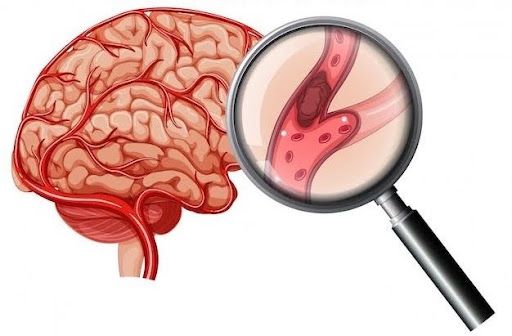
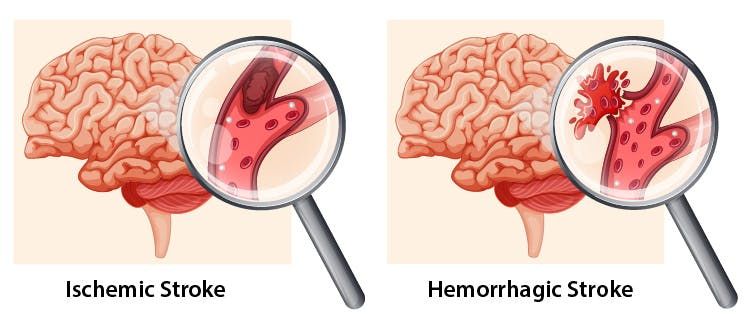
An ischemic stroke, the most common type (87%), occurs when an artery to the brain is blocked, either by narrowing of the blood vessel (arteriosclerosis) or a blood clot. The main cause of ischemic stroke is atherosclerosis, which happens when fatty deposits build up in the artery’s inner lining. Abnormal heart rhythms, known as atrial fibrillation (AFib), are the leading cause of cerebral embolism. AFib causes clots to form in the heart chambers, which can break off and travel to the brain.
Hemorrhagic stroke
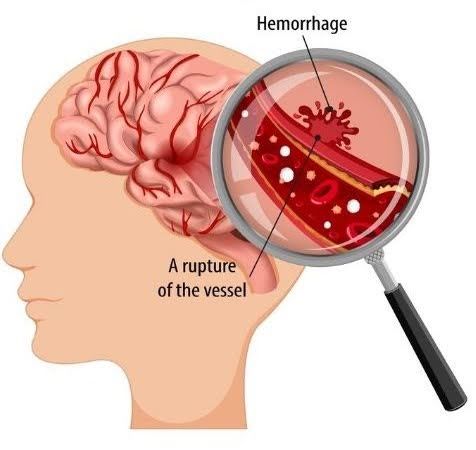
A hemorrhagic stroke occurs when a blood vessel leaks or bursts, causing bleeding in the brain. While often linked to high blood pressure, other causes include aneurysms and arteriovenous malformations (AVMs).
An aneurysm is a weakened area in a blood vessel wall that can balloon and eventually rupture, leading to bleeding in or around the brain. AVM is a tangle of abnormal blood vessels that can also rupture and cause a hemorrhage. Both conditions can lead to life-threatening bleeding and require immediate medical attention.
High blood pressure (hypertension) can damage small arteries, causing them to rupture. A subarachnoid hemorrhage occurs when an artery near the surface of the brain ruptures, bleeding into the space between the brain and the skull.
Transient Ischemic Attack (TIA)
A Transient Ischemic Attack (TIA), or “mini-stroke,” occurs when a blood clot temporarily blocks an artery. The main difference between a TIA and other strokes is the short duration, and it doesn’t cause death or permanent brain damage.
You can’t tell if you’re having a TIA or a major stroke, as the symptoms are the same. It’s important to recognize stroke signs and seek immediate medical attention to address the underlying issue. Do not ignore a TIA, as it indicates an ongoing problem that needs to be treated.